
Mexico - Morelia
- curvesandcracks

- Sep 20, 2025
- 3 min read
I've been in Morelia for two weeks and I'm slowly settling into my new life. The hectic beginnings are slowly giving way to discovery.
I increasingly turn to people when I need help... like finding an item at the grocery store, figuring out how to take the bus, or requesting an extension to my car's import permit at customs. I could figure it out on my own, with the help of Google, but these small daily interactions are strengthening my self-confidence and... my Spanish skills.
It must be said that everyone I meet is very welcoming and genuinely wants to help me. From the general public, to the shopkeepers, the military, and the Civil Guard.


I'm walking through Old Morelia and I like what I see. This city, founded in 1541, 67 years before Quebec City, and which, like Quebec City, is a World Heritage Site, is magnificent.


Lucky as always, my arrival in Morelia coincides with the national independence day. So, I wander around, explore, and enjoy the parades and activities.


Obviously, horses have a place of honor. They are ridden by men, women, some side-saddle, and even children... like this little girl who mounted a donkey with unparalleled poise, a legacy of her ancestors.

I take the opportunity to wander through the alleys and, of course, sit down in a café to enjoy an excellent meal to the sound of the transverse flute.
Fountains dot the city with oases of coolness, although it's not so necessary here. Morelia is located at over 1,700 meters above sea level and has a perfect temperature year-round. Between 5°C and 14°C at night and 22°C and 29°C during the day. Cool nights with beautiful, slightly warmer days, what more could you ask for?
The temperature is so perfect that the homes here have neither air conditioning nor heating.


Morelia is also an outstanding example of urban planning that combines the ideas of the Spanish Renaissance with the experience of the Mexican "first nations" and has been adapted to the slopes of the valley.

Credit: fotosdemichoacan
I stroll through the city, leisurely discovering the parks and historic monuments, built of pink stone extracted from local quarries.
Most notably, there's the cathedral. Interestingly, it's the only Mexican cathedral to face north, rather than east, the traditional orientation of Christian churches, symbolizing the sunrise and the resurrection of Christ.
This peculiarity can be explained by the leaders of the time who prioritized urban planning over tradition.


The civil engineering feat that impresses me most is the aqueduct. Built in 1549 and over 1,700 meters long, it has been improved and even rebuilt several times.
The aqueduct carried water to the city limits, from where it was distributed, through an underground clay pipe, to fountains, convents, and private homes. In 1910, it was replaced by a more modern, but certainly less attractive, structure. Fortunately, the original structure has been preserved.

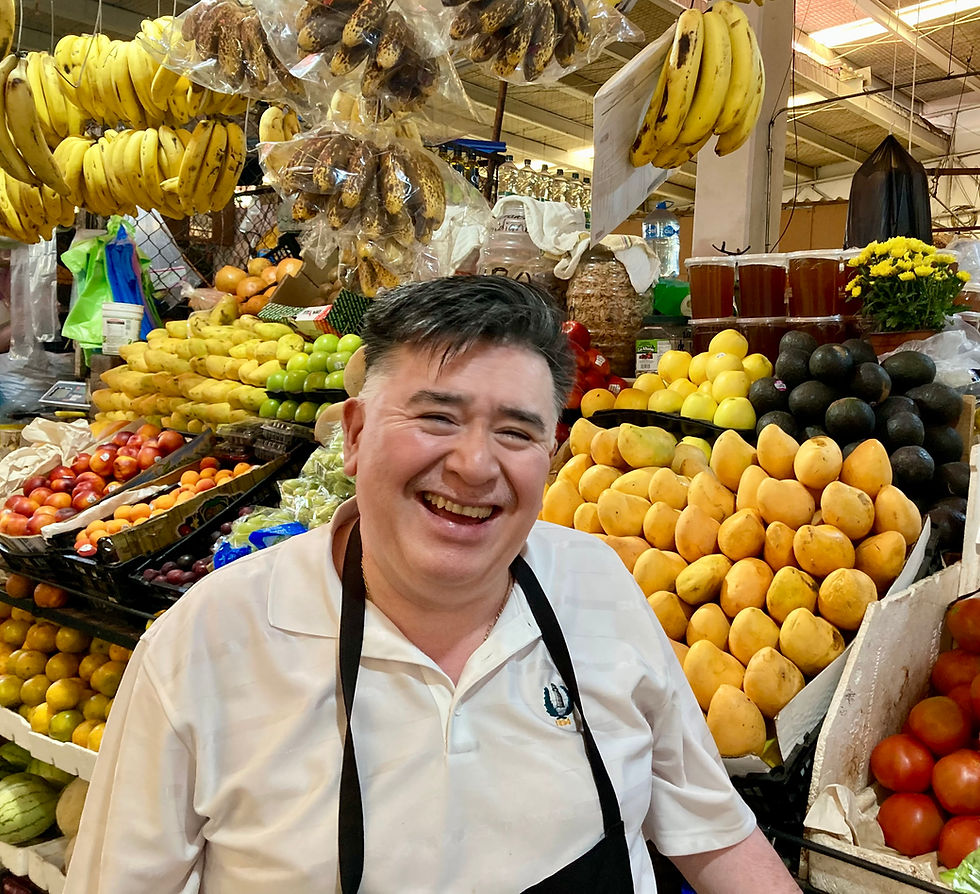
One of my goals in moving to Mexico was to learn more about the culinary culture. So, since I arrived, I've been trying, tasting, and savoring.


I tasted vegetables and fruits I only knew by name... until now, and others that were completely unknown to me. Cactus fruits and pad, spiky chayotes, endless varieties of chili peppers, and new cheeses I wasn't familiar with and that I'm still learning to master.
I couldn't have dreamed of a better introduction to Mexico, and I'm already looking forward to the rest of my adventure.



Comments